
Most underfloor heating faults fall into a handful of patterns. Four of them you can check yourself in about five minutes. The rest need someone at the manifold with a thermometer. This guide tells you which is which, so you are not paying a call out charge for a flat set of thermostat batteries.
Jump to your symptom
- Start here: four checks that take five minutes
- One room is cold, the rest of the floor is warm
- The floor is warm but never gets hot
- The thermostat says it is on but the floor is cold
- Radiators work, the underfloor does not
- Everything stopped after a power cut or a new boiler
- Gurgling, banging or air in the pipes
- The pressure keeps dropping
- Electric underfloor heating is cold or patchy
- What not to try yourself
- Common questions
Start here: four checks that take five minutes
Do these before anything else. Between them they explain a large share of the underfloor calls we get in London.
- Change the thermostat batteries. Wireless room thermostats run on batteries and they fail quietly. The screen can still look normal while the signal has stopped reaching the wiring centre. Put fresh batteries in before you do anything else.
- Check the schedule, not just the temperature. Turn the target temperature up by three or four degrees and see if anything happens. Then check the programme. Underfloor heating is often set to run on a long, low schedule, and clocks that reset after a power cut will heat the house at the wrong time of day.
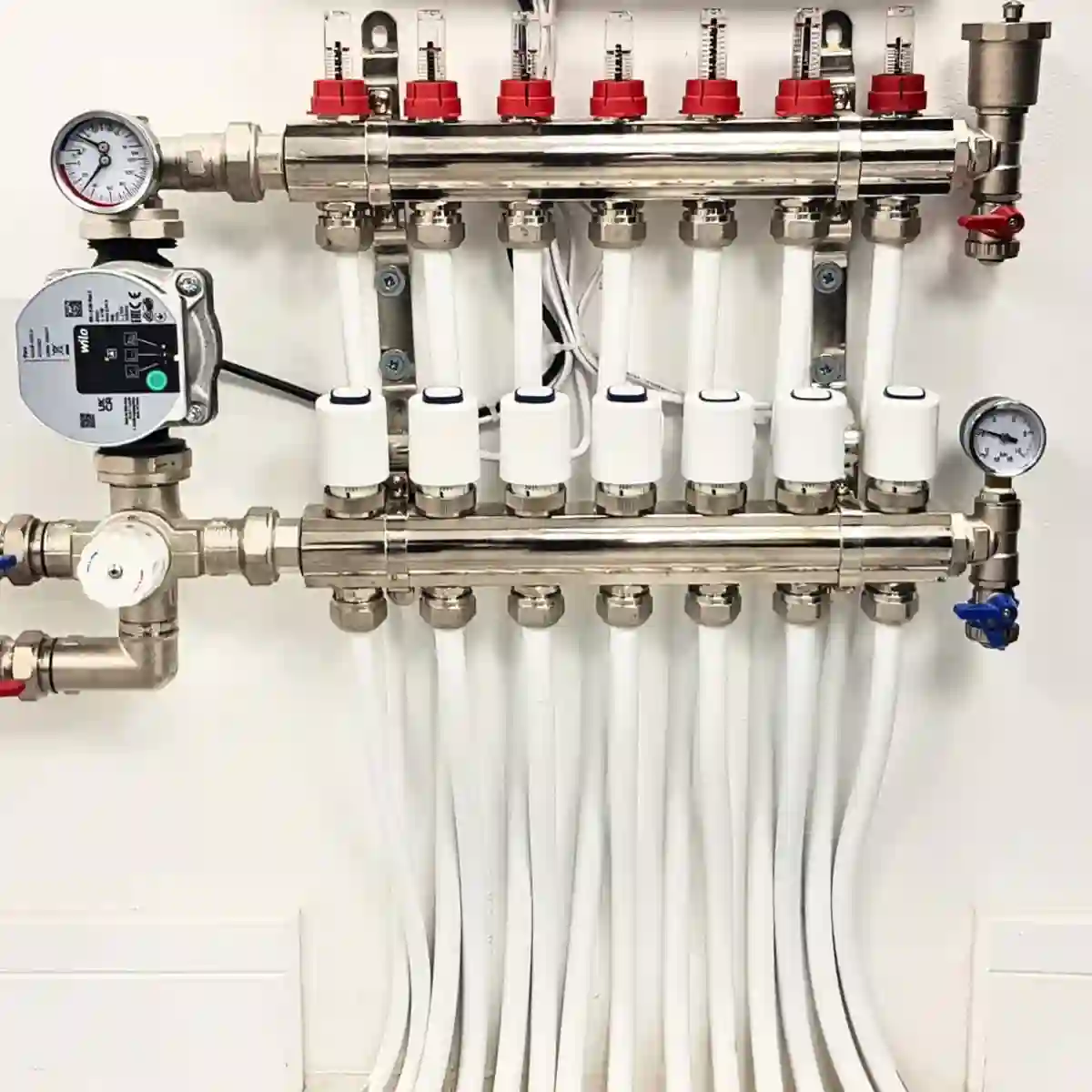
- Look at the manifold flow meters. The manifold is usually in a cupboard, under the stairs or in the utility room. It has a row of small clear gauges, one per room, each with a float sitting at a number. If one is sitting at zero while the others are not, that loop is shut off. Decorators, cleaners and previous engineers all knock them.
- Check the system pressure. On a wet system fed by a boiler, look at the pressure gauge. Most sit between 1 and 1.5 bar when cold. If it is near zero the system will not circulate properly, and that tells you water has gone somewhere it should not.
If all four check out and the floor is still cold, the fault is in the parts you cannot see: the actuators, the pump, the blending valve or the heat source. That is the point to call someone.
One room is cold, the rest of the floor is warm
This is the most common underfloor fault and the most reassuring, because the system itself is working. Each room runs on its own loop of pipe from the manifold, with its own actuator and its own flow meter, so a single cold room means a single failed part.
Likely causes
- A stuck actuator. The small white or black heads sitting on top of the manifold valves. They open when the room calls for heat. They fail closed more often than open, and they are a cheap part.
- A flow meter turned down or shut. Covered in the five minute checks above.
- Air trapped in that loop. Air sits in the high point of a pipe run and stops circulation in that one circuit.
- The room thermostat. Flat batteries, a lost pairing, or a thermostat that has been replaced and never paired to the right channel.
What you can check
With the heating running, feel the two pipes for that room where they meet the manifold. On a working loop the flow pipe is hot and the return is warm. If both are cold while the neighbouring loops are hot, the actuator is not opening or the loop is blocked.
The floor is warm but never gets hot
This one is often not a fault at all. Underfloor heating is designed to run at a much lower temperature than radiators, and a correctly set floor feels pleasantly warm rather than hot. A tiled bathroom floor feels warmer underfoot than the same temperature under carpet or engineered wood.
It becomes a fault when the room never reaches the temperature you set it to.
Likely causes
- The blending valve is set too low. This valve mixes hot water from the boiler with cooler return water to protect the floor. If it has been set conservatively, or has started to fail, the whole floor runs cool.
- The boiler flow temperature is too low for the manifold. Common after a boiler replacement, or after someone turns the flow temperature down to save gas.
- The loops are out of balance. Long loops starve when short ones take the flow. Balancing at the manifold fixes it.
- Sludge in the system. Years of debris slow the circulation, particularly where the underfloor shares a system with old radiators.
- Floor covering. Thick carpet, heavy underlay and some engineered boards hold the heat down. If the system was designed for tile and the room now has carpet, the output drops.
The thermostat says it is on but the floor is cold
The thermostat only asks for heat. Several things have to answer it, and any one of them can be the break in the chain.
The chain, in order
- The thermostat calls for heat.
- The wiring centre receives the signal and powers the actuator for that zone.
- The actuator opens the valve on the manifold.
- The wiring centre fires the pump and asks the boiler or HIU for heat.
- Hot water reaches the manifold and circulates through the loops.
An engineer works along that chain with a meter rather than guessing. The usual culprits are the wiring centre, a seized pump and a failed floor sensor on systems that use one.
What you can check
Stand next to the manifold and turn the thermostat up. Within a few minutes you should hear the pump start and feel the flow pipe warming. Silence at the manifold points at the controls or the pump. A warm flow pipe with a cold floor points at the actuators or the loops.
Radiators work, the underfloor does not
If the radiator circuit heats up and the floor stays cold, the heat source is fine. The problem sits in the part of the system that serves the underfloor only.
- The underfloor circulating pump. Most manifolds have their own pump. They seize, particularly after a summer of standing still.
- The zone valve. A two port valve feeding the underfloor circuit can fail closed or lose its signal.
- The wiring centre. The underfloor zone may simply not be getting a signal.
A pump that is running will hum and feel faintly warm. One that is silent and cold when the system is calling for heat has probably failed or lost its power supply.
Everything stopped after a power cut or a new boiler
Underfloor heating depends on its controls more than a radiator system does, so it suffers more when the power goes off or an installer reconnects things.
- Programmers and wiring centres lose their time and schedule, so the heating runs at the wrong hours or not at all.
- Wireless thermostats drop their pairing with the receiver.
- After a boiler swap, the underfloor pump and valve are sometimes wired to the wrong terminal, or the new boiler is set to a flow temperature the manifold cannot work with.
- Some systems need recommissioning after the water has been drained, including bleeding each loop at the manifold.
Reset the clock and the schedule first. If a boiler was changed and the underfloor has not worked properly since, go back to whoever fitted it before paying anyone else.
Gurgling, banging or air in the pipes
Gurgling means air in the loops. Air stops water circulating, so the room above that pipe run goes cold even though everything else looks right.
Air gets in when the system is drained and refilled, when pressure drops low enough to pull air through a joint, or slowly through corrosion in an older system. Bleeding an underfloor manifold is not the same as bleeding a radiator. Each loop is isolated and flushed in turn, then the system is brought back to pressure. Done wrongly you push the air into another loop and end up with a different cold room.
The pressure keeps dropping
Pressure that falls once after a top up is normal. Pressure that falls every week is not.
- The expansion vessel has lost its charge. A common and inexpensive fault, and the first thing to rule out.
- The pressure relief valve is passing. Water escapes through the discharge pipe outside, often unnoticed.
- Air is being bled out repeatedly. Each bleed drops the pressure a little.
- A leak. That can be at the manifold, at a joint, or in the buried pipework itself. A leak you can see is a repair. A leak you cannot see needs specialist non-invasive detection, which is a separate trade.
Repeatedly topping a system back up hides the problem and pushes fresh oxygenated water into it, which accelerates corrosion. If you are topping up more than about once a month, get the cause found.
Electric underfloor heating is cold or patchy
Electric systems are a heating mat or cable under the floor finish, not pipework, so they fail in different ways.
- The thermostat has failed. The most common cause by a distance, and the easiest to fix.
- The floor sensor has failed. A probe sitting in the floor between the cable runs. When it fails the thermostat often shows an error or refuses to switch on.
- A break in the heating cable. Usually caused during installation or by a later job such as fitting a new kitchen.
- No power at the circuit. Check the breaker and any RCD serving the bathroom or kitchen before assuming the worst.
Patchy heat across one area usually means a cable fault. A floor that is completely dead with a working thermostat usually means a supply or connection fault.
To be clear about what we do: PH247 works on wet underfloor heating only. Electric mats and cables are an electrician’s job. This section is here so you can work out what you are dealing with, not a service we offer.
What not to try yourself
Three things are worth leaving alone.
- Do not lift the floor to look for a leak. A visual inspection comes first. Where a leak cannot be seen, it needs specialist non-invasive detection, not a guess at which section to open.
- Do not turn the blending valve up to force more heat in. Running a screed floor too hot can crack the screed and damage timber and vinyl finishes.
- Do not work inside the wiring centre. It carries mains voltage and sits alongside water. It is also the part most often left wired incorrectly by someone who thought the same thing.
If the system is in a flat on a heat network
Plenty of London flats have underfloor heating fed by a Heat Interface Unit rather than a boiler. When the floor goes cold in one of those, the fault is often inside the HIU or its controls rather than the underfloor system. The checks above still apply at the manifold, but anything beyond that needs someone who works on HIUs. We cover HIU service and repair across London.
When to call someone
Call an engineer when the five minute checks come back clear, when you can hear no pump at the manifold, when the pressure keeps dropping, or when you suspect a leak. Describe the symptom on the phone rather than just saying the heating is broken. Which rooms are cold, what the thermostat says, whether the radiators work, and whether anything changed recently are the four things that tell us what to bring.
Our underfloor heating repair service covers London inside the M25. You can also read about heating repairs and power flushing if the system is sludged.
Common questions
Why is one room of my underfloor heating cold when the rest is warm?
Each room runs on its own loop from the manifold with its own actuator and flow meter, so a single cold room points at a single part. The usual causes are an actuator stuck closed, a flow meter that has been turned down, air trapped in that loop, or a room thermostat that is no longer calling for heat. Feel the flow and return pipes for that room at the manifold. If both are cold while the neighbouring loops are hot, the loop is not opening.
Why is my underfloor heating warm but never hot?
Underfloor heating runs at a much lower temperature than radiators, so a correctly set floor feels warm rather than hot. It is only a fault if the room never reaches the temperature you set. The common causes are a blending valve set too low, a boiler flow temperature that is too low for the manifold, loops that need balancing, sludge slowing the circulation, or a floor covering such as thick carpet that holds the heat down.
My thermostat says the heating is on but the floor is cold. What is wrong?
The thermostat only asks for heat. The wiring centre, the actuator, the pump and the heat source all have to answer it. Stand at the manifold and turn the thermostat up. If you hear nothing, the fault is in the controls or the pump. If the flow pipe warms up but the floor stays cold, the fault is in the actuators or the loops. Change the thermostat batteries first, because flat batteries are the single most common cause.
Why does my underfloor heating keep losing pressure?
Not always a leak. An expansion vessel that has lost its charge, a pressure relief valve that is passing, or air being bled out repeatedly all drop the pressure. Those get ruled out first. A visible leak can be quoted and repaired. A buried leak that cannot be seen needs specialist non-invasive detection, which is a separate trade.
Can I fix underfloor heating myself?
You can change the thermostat batteries, reset the schedule, check the manifold flow meters are open and check the system pressure. Those four take about five minutes and solve a fair share of problems. Leave the rest alone. Do not lift a floor to look for a leak, do not turn the blending valve up to force more heat in because it can crack screed and damage timber finishes, and do not open the wiring centre, which carries mains voltage next to water.
Do PH247 work on electric underfloor heating?
No. We specialise in wet underfloor heating, the type run in pipework from a manifold. Electric mats and cables are an electrical fault rather than a plumbing one, so you need an electrician who works on floor heating. We would rather tell you that now than charge you a call out fee for a job we are not the right people for.
Wet underfloor heating repair across London
We find the fault before we change parts. Manifolds, actuators, pumps, blending valves and controls, anywhere inside the M25. Lines are open 8am to 5pm, Monday to Friday.


 Explore our home maintenance guide & news
 Privacy Policy