
Case Study: Expert HIU Repair – Diagnosing and Fixing Lukewarm Hot Water
At PH247, our primary focus is delivering rapid, reactive solutions when your home’s heating or hot water systems let you down. Recently, we were called out to a property in Walton-on-Thames, United Kingdom, where the homeowner was dealing with a frustrating issue: the hot water coming from their taps was only lukewarm.
Here is a breakdown of how we diagnosed the problem, the options we provided, and the steps we took to get their Heat Interface Unit (HIU) back to peak performance.
The Problem: Lukewarm Water from a Heat Interface Unit
Location: Walton-on-Thames, UK
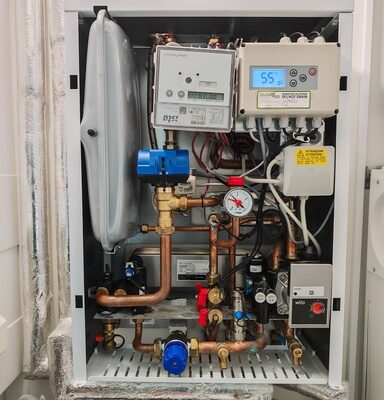
Appliance: Heatrae Sadia HI-MAX INSTANT ID 5-80 (Heat Interface Unit)
Reported Fault: Domestic hot water failing to reach the correct temperature.
Upon arrival, we tested the hot water outlets and confirmed the customer’s complaint: the water was lukewarm at best.
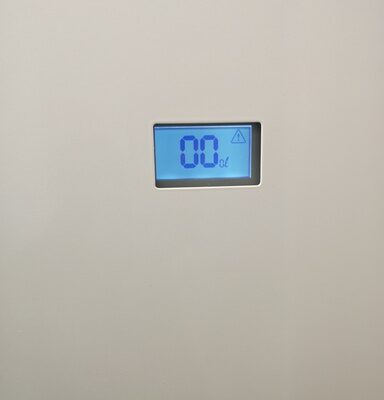
Because HIUs rely on a delicate balance of primary heat network flow and secondary domestic components, diagnosing them requires precision. While some units will display a specific fault code when a temperature error occurs, this unit did not. We ran a series of diagnostic tests on the internal mechanisms and consulted technical guidelines to isolate the exact point of failure.
The Diagnosis & Client Options
We identified that the root cause was a combination of two failing internal components: the hot water sensor and the blending valve.
As part of our commitment to transparent service, we always give our clients the full picture. We sat down with the homeowner and offered them two distinct paths forward:
An Upgrade: Replacing the ageing HIU with a modern, highly efficient BESA-tested unit.
A Direct Repair: Replacing the faulty components and flushing the system to restore the current unit’s functionality.
The client opted to go ahead with the repair option, which is a highly cost-effective way to extend the lifespan of an existing HIU when the core plate heat exchangers are still intact.
The Action Plan
To fully resolve the lukewarm water issue and prevent immediate future breakdowns, we executed the following three-step repair plan:
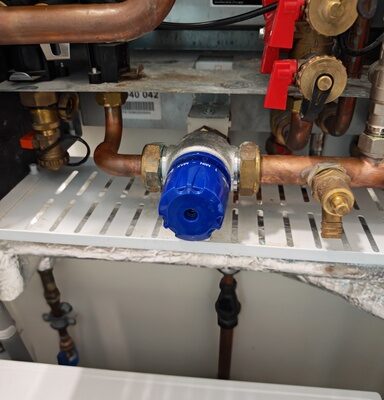
1. Replaced the Blending Valve: The blending valve is responsible for safely mixing the high-temperature primary water with cold mains water. Replacing this ensured the HIU could properly regulate and achieve the desired hot water output temperature without risking scalding or under-heating.
2. Replaced the Hot Water Sensor: The HIU relies on this sensor to know exactly how much heat to pull from the network. Fitting a brand-new sensor guarantees accurate temperature readings, allowing the electronic control unit to modulate the valves efficiently.
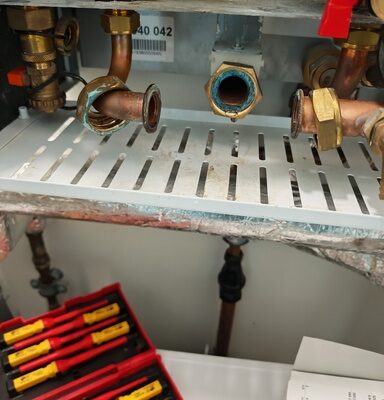
3. Cleared System Blockages: HIUs are highly susceptible to scaling and debris from the primary network. We cleared out the strainers and internal pipework to remove any potential blockages. This restores optimal water flow, reduces pressure drops, and protects the new components from premature wear.
(See the images below from the site visit, detailing the internal HIU components we worked on.)
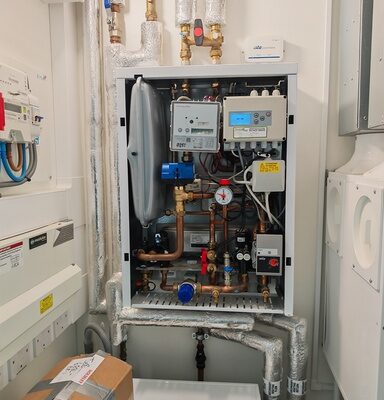
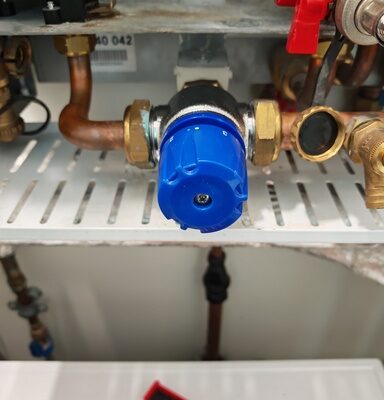
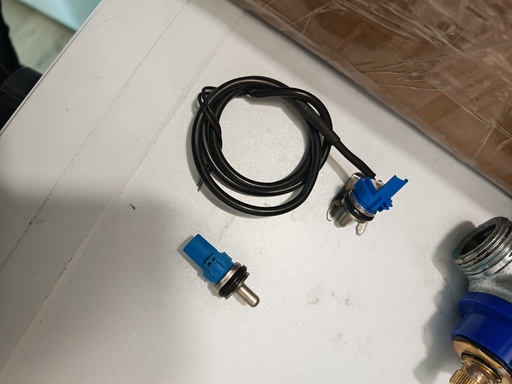
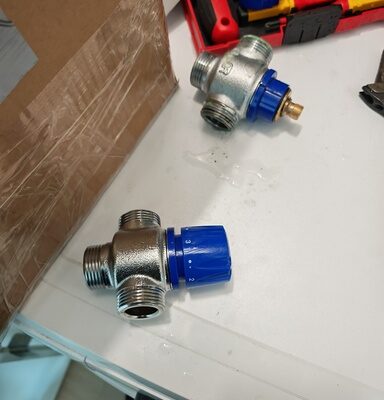
The result? Instant, consistent hot water restored to the property, and another satisfied customer.
HIU Troubleshooting FAQs
If you live in an apartment or modern development with a communal heat network, you likely have an HIU instead of a traditional boiler. Based on our field experience and industry guidelines, here are answers to the most common HIU questions we receive.
Need an HIU serviced or repaired? PH247 provides HIU service & repair across London – 24/7 emergency callouts and annual servicing by Gas Safe registered engineers.
Related services
PH247 covers hot water problems, plumbing for property managers and proactive maintenance.


 Explore our home maintenance guide & news
 Privacy Policy