
Unvented and Vented Cylinder Installation and Repair in London

Installation, repair and replacement of unvented and vented hot water cylinders across London. G3 qualified engineers and Megaflo specialists.

Book an Appointment
Illustrated PH247 plumber mascot

Cylinder installation and repair

PH247 installs, repairs and replaces unvented and vented hot water cylinders across London. Every cylinder engineer on our team holds a current G3 qualification, which the law requires for any work on an unvented cylinder over 15 litres. We are Megaflo specialists, we cover all major makes, and we will tell you plainly whether your cylinder is worth repairing before we quote you for a new one.

Unvented cylinders run at mains pressure, typically 1.5 to 3.5 bar, so every tap and shower in the house gets strong, even flow with no loft tank. Vented cylinders feed from a header tank by gravity and suit older systems. Building Regulations Part G3 restricts installation, servicing and repair of any unvented cylinder over 15 litres to engineers holding a current G3 qualification, and every PH247 cylinder engineer holds one.

Cylinder faults we fix

Most cylinder problems show up as one of six symptoms. Here is what each usually means and what we do about it.

Water dripping from the tundish

The tundish is the small open funnel in the pipework above the cylinder. It exists so that a safety valve discharge is visible. If water is running through it, a safety valve has opened and the system has a fault.

The temperature of that water tells us where the fault is. Cold or warm water points at the pressure side, usually a failed expansion vessel or a pressure reducing valve letting too much mains pressure through. Scalding water points at the thermostats, and means the water is heading towards 90°C with the relief valve as the only thing still protecting you. If the water is scalding, switch the cylinder off and call us the same day on 020 3764 2713.

No hot water at all

Usually one of four things. The high limit cut out on the cylinder thermostat has tripped, which it does between 80°C and 89°C and will not reset itself. The motorised zone valve on the boiler has failed. The immersion heater element has burnt out. Or the controls have lost power. We test each in turn and fix the cause rather than resetting the switch and leaving you to call again in a fortnight.

Immersion heater not working

A burnt out element, a short to earth, or the thermal cut out tripping because limescale has built up on the element. The signs are no hot water on electric, very slow reheat, or the breaker tripping the moment you switch the immersion on. We test for supply, continuity and insulation resistance, then replace the element if it has failed. In hard water areas we fit titanium elements, which last considerably longer than the standard ones.

Lukewarm water, or hot water running out quickly

Often the expansion space inside the cylinder has been lost. On a Megaflo the air bubble in the top of the cylinder slowly dissolves into the water, and once it has gone, cold water displaces the hot. We recharge it on site. Other causes are a thermostat set below 60°C, limescale coating the heating coil or immersion element, or a failed check valve letting cold water cross into the hot pipework at a mixer tap.

Weak pressure or poor flow from the hot taps

Nearly always the line strainer. It is a small mesh filter on the cold inlet that catches grit from the street mains, and it blocks over time. We isolate the supply, strip it out, clean it and refit. If the pressure reducing valve itself is sticking we replace the cartridge or the whole inlet control set. On a vented cylinder, weak pressure upstairs is usually not a fault at all, only gravity, and we will tell you so rather than sell you a repair you do not need.

If the weak pressure runs across the whole property rather than the hot taps alone, see low water pressure and weak showers.

Banging, rumbling or leaking

Banging when you open a tap is usually pipework that is not clipped properly. Rumbling from inside the cylinder is limescale on the heating surfaces. Water pooling at the base can be a loose joint or a perished gasket, both of which we repair. If the leak is coming from the body of the cylinder itself it cannot be safely patched and the cylinder needs replacing. We will tell you which it is before you spend anything.

We work on all the major unvented brands, including Megaflo, Gledhill, OSO, Joule, Telford and Kingspan.
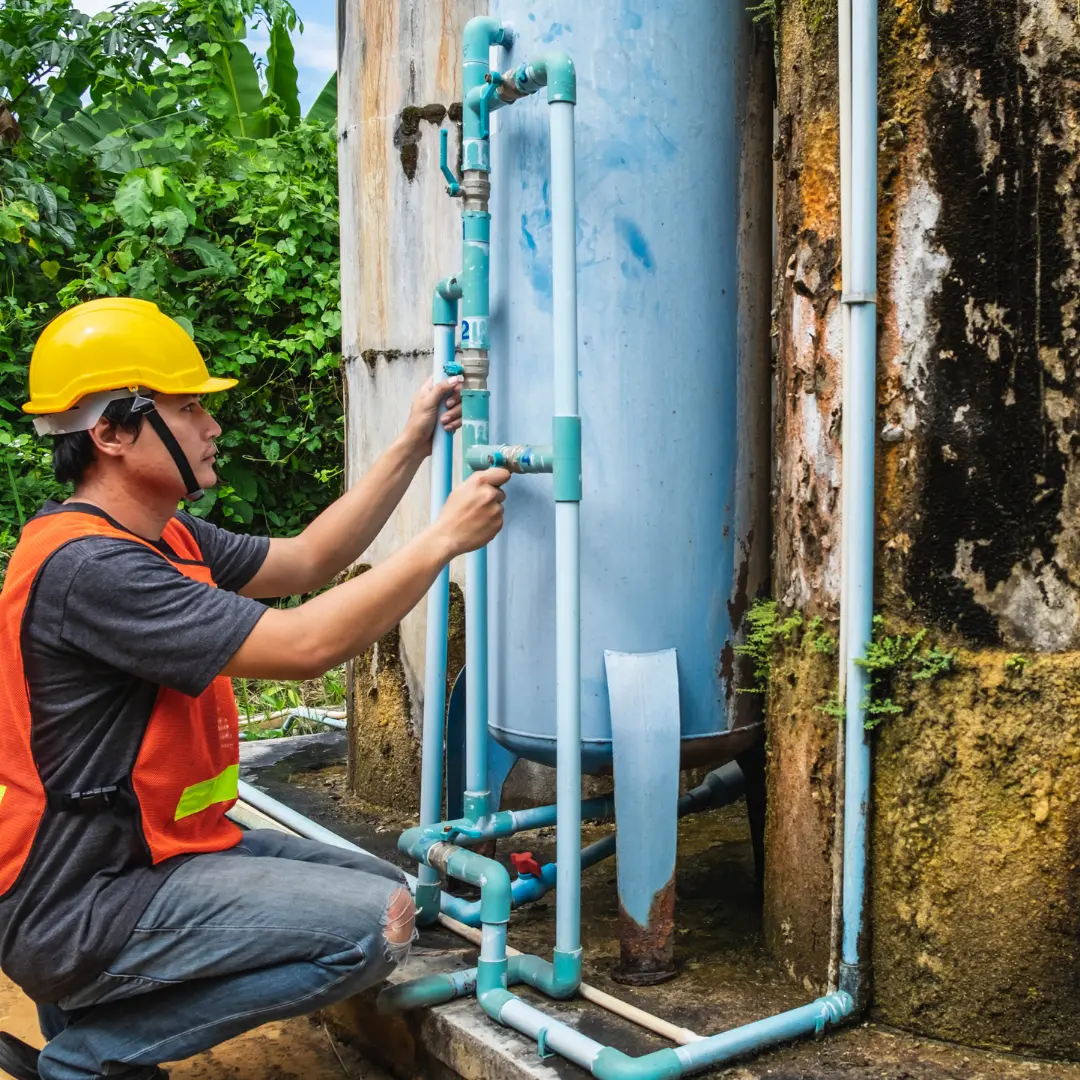

Megaflo repair and service

Megaflo is the most common unvented cylinder in London homes, and most of the cylinder calls we take are for one. The Heatrae Sadia range is built in Duplex stainless steel, comes in sizes from 60 to 300 litres, and carries a 25 year guarantee on the shell provided it is serviced every year.

Megaflo uses an internal air bubble in the top of the cylinder instead of a separate expansion vessel. Over time that bubble dissolves into the stored water, and when it goes you get water in the tundish and hot water that runs lukewarm or runs out early. Recharging it is a straightforward job for a G3 engineer and it is the single most common Megaflo fault we attend.

We service, repair and replace the full Megaflo range, including Megaflo Eco and the slimline units that suit London flats with tight airing cupboards.

Hot water cylinder replacement and new installations

If your cylinder is past repair, or you are moving from a gravity fed tank to mains pressure, we handle the whole job including the Building Control notification.

Will your mains supply take an unvented cylinder?

This is the first thing we check and it is the thing most quotes skip. An unvented cylinder needs at least 1.5 bar of working pressure and at least 20 litres per minute of flow, measured while water is running, not standing still. A high standing pressure does not guarantee the flow rate. The incoming mains pipe also needs to be at least 22mm, so older London properties still on 15mm or lead often need an upgrade first.

If your supply does not reach those numbers we will say so. The answer is then a cold water accumulator, a booster, or keeping a vented system. We would rather tell you that before you buy than after.

What a compliant installation includes

An unvented cylinder is a pressurised vessel, so the safety pipework is not optional detail. A correct installation includes:

  • A temperature and pressure relief valve on the cylinder, with a copper D1 pipe running no more than 600mm to the tundish
  • A tundish mounted vertically, visible, in the same cupboard as the cylinder
  • A D2 discharge pipe at least one size larger than D1, with a straight 300mm drop below the tundish before any bend, then a continuous fall of at least 1 in 200 to a safe outside termination
  • An expansion vessel sized at 8 to 10 per cent of the cylinder volume and pre-charged to match the working pressure, or an internal air gap on cylinders built that way
  • A balanced cold supply taken after the pressure reducing valve and before the check valve, so showers and mixer taps get hot and cold at the same pressure
  • Pipework insulated to Part L

Badly routed discharge pipework is the single most common reason an unvented installation fails inspection.

Your unvented hot water certificate

Installing or replacing an unvented cylinder over 15 litres is notifiable building work under Part G3. We self certify through a Competent Person Scheme, so you get a Building Regulations compliance certificate without having to deal with your local authority yourself. We also complete and sign the Benchmark commissioning checklist and leave it with you.

Keep that Benchmark somewhere safe. Without it signed, the manufacturer guarantee is void, and a 25 year guarantee is worth very little if you cannot evidence the commissioning and the annual services.

What it costs

Three things move the price of a cylinder replacement: the size and type of cylinder, whether the incoming mains pipe needs upgrading, and how far the discharge pipe has to run to a safe termination. We quote after testing the supply rather than before. See our rates or call 020 3764 2713.

Vented cylinders and loft tank systems

Vented cylinders are fed by gravity from a tank in the loft and run at low pressure, usually 0.2 to 0.5 bar. They are still the right answer in plenty of London properties, particularly where the mains supply is weak or the existing pipework will not take mains pressure.

The faults are different. Ball valves in the loft tank seize open and overflow. Open tanks collect dust and debris, which blocks the cold feed. Pipes in an unheated loft freeze. And if the cylinder thermostat fails, boiling water goes up the vent pipe and discharges into the loft tank, which is both noisy and dangerous. Copper vented cylinders last roughly 10 to 15 years before pinhole leaks start, and at that point replacement is the only option.

We repair and replace vented cylinders too, and we will give you a straight answer on whether converting to unvented is worth it for your property.

Which cylinder suits your property

Unvented gives you mains pressure at every outlet, needs no loft tank, and modern stainless steel units last 20 to 30 years with a 25 year guarantee on the shell. It needs a strong mains supply and an annual service.

Vented is cheaper to replace like for like, works where the mains supply is poor, and uses simpler parts. It needs loft space, and the pressure upstairs is often weak.

If you live in a flat on a communal heating network you may have neither. See the heat interface unit section below.

Annual servicing keeps your guarantee valid

Manufacturers require an annual service by a G3 engineer as a condition of the guarantee. The service covers easing both relief valves open and checking they reseat, checking and recharging the expansion vessel or air gap, cleaning the line strainer, verifying the pressure reducing valve and the storage temperature, inspecting the discharge pipework, and signing the Benchmark logbook. Miss it and a manufacturer can refuse a claim on a cylinder that still has twenty years of guarantee left on paper.

Full detail and pricing on our hot water cylinder service page.

Cylinder repair across London

We cover every London borough inside the M25, including Camden, Islington, Hackney, Tower Hamlets, Southwark, Lambeth, Wandsworth, Hammersmith and Fulham, Kensington and Chelsea, Westminster, Greenwich, Lewisham, Waltham Forest, Haringey, Brent and Ealing. Our engineers are mobile and dispatched direct to you.

Contact Us
Vented and unvented cylinders

Book

25%

We Arrive

50%

Fix the Problem

75%

Leave Property

100%

Customer Reviews

4.96 / 5
1,200+ Verified Customer Reviews
✓ Vetted & Approved by TrustATrader ✓ 0 missed appointments in the past 6 months
Read all 1,200+ reviews
PH247 is a vetted TrustATrader member (TT19385)

Cylinders and heat interface units

If you live in a flat on a communal heating network, you may not have a cylinder at all. Heat and hot water arrive through a heat interface unit, which transfers heat from the building’s network into your flat through a plate heat exchanger rather than storing it. The symptoms overlap with cylinder faults, so it is worth checking which you have before booking. We cover HIU service and repair as well as cylinders.

Frequently Asked Questions

What is the difference between an unvented and a vented cylinder?

An unvented cylinder is sealed and fed straight from the mains, so it delivers 1.5 to 3.5 bar at every tap with no loft tank. A vented cylinder is fed by gravity from a tank in the loft and delivers roughly 0.2 to 0.5 bar, which is why upstairs showers are often weak. Unvented needs a strong mains supply, an annual service and a G3 engineer. Vented is simpler and cheaper to replace like for like.

How much does it cost to replace a hot water cylinder in London?

Three things move the price: the size and type of cylinder, whether the incoming mains pipe needs upgrading, and how far the discharge pipe has to run to a safe termination. We test your mains pressure and flow before quoting, so the figure reflects the job rather than a guess. See our rates or call 020 3764 2713.

How long does an unvented cylinder last?

A modern stainless steel unvented cylinder typically lasts 20 to 30 years and usually carries a 25 year guarantee on the shell, as long as it has been serviced every year and you have the signed Benchmark records. Older copper vented cylinders tend to last 10 to 15 years before pinhole leaks appear.

Can I replace my vented cylinder with an unvented one?

Usually, but it depends on your mains supply. We need at least 1.5 bar working pressure and 20 litres per minute of flow, and an incoming mains pipe of at least 22mm. Plenty of older London properties are still on 15mm. We test the supply before quoting, and if it will not support an unvented cylinder we will say so and talk you through an accumulator or a vented replacement instead.

Why is water dripping from my tundish?

Water in the tundish means a safety valve has opened and the system needs a G3 engineer. Lukewarm water usually means the expansion vessel membrane has failed or the internal air bubble has depleted. Scalding water means both thermostats have failed and the relief valve is the only protection left, so switch the cylinder off and call us the same day on 020 3764 2713.

Do I need a G3 qualified engineer for an unvented cylinder?

Yes, by law. Building Regulations Part G3 restricts work on unvented cylinders over 15 litres to engineers with a current G3 qualification, and the work is notifiable to Building Control. PH247’s engineers hold the qualification and certify installations through a Competent Person Scheme, so you receive a Building Regulations compliance certificate for the work.

Why is my Megaflo not heating properly?

The usual cause is the internal air bubble having dissolved into the stored water, which leaves no room for the water to expand. You get lukewarm water, hot water that runs out early, and often water in the tundish. A G3 engineer recharges the air bubble as part of a service. If recharging does not hold, the next things to check are the thermostat and the immersion element.

Do you provide an unvented hot water certificate?

Yes. We self certify through a Competent Person Scheme and issue a Building Regulations compliance certificate for every unvented installation, along with a completed and signed Benchmark commissioning checklist.

Accreditations

Contact Us


1
Scan the code
