
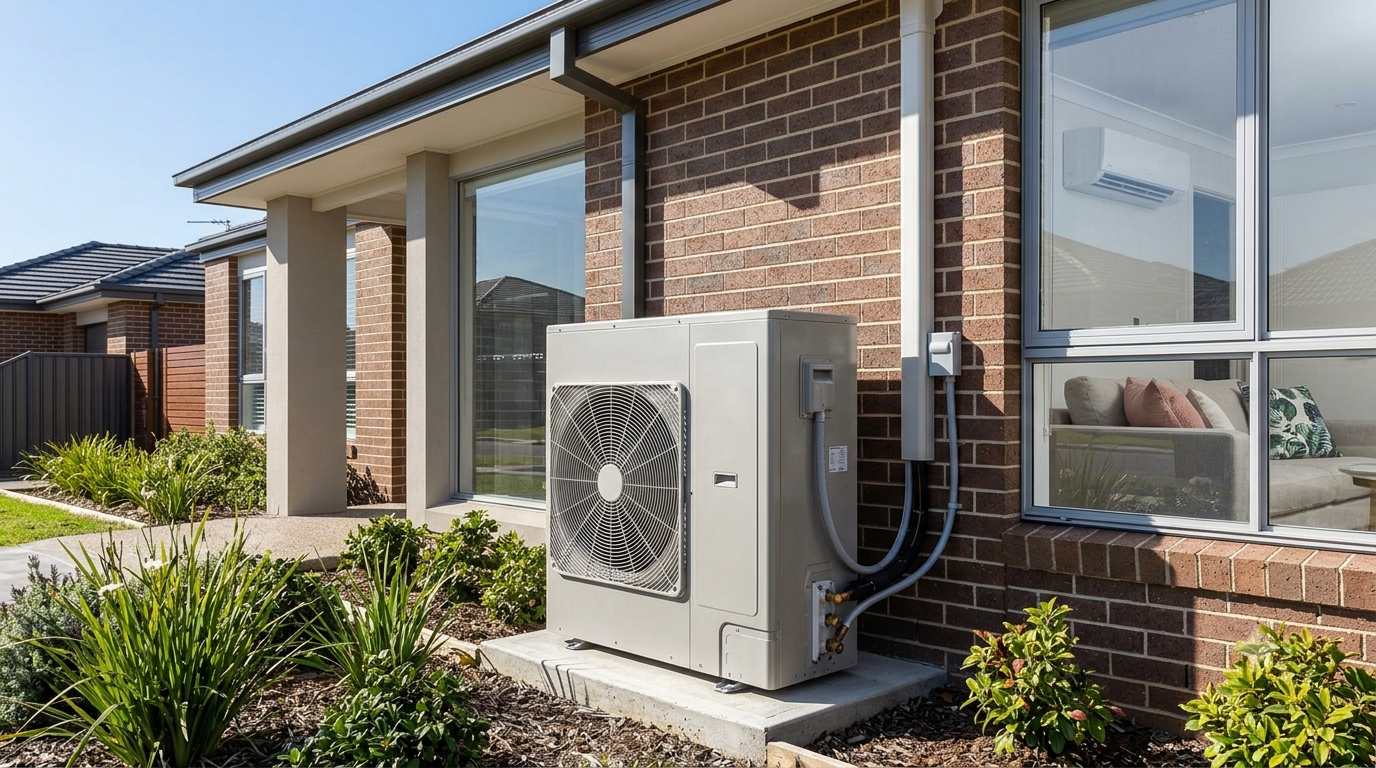
The Boiler Upgrade Scheme has changed twice in 2026. The first change was legal and came into force on 28 April. The second was financial and started on 21 July. Between them they alter who can apply, what the grant is worth, and how the money reaches you.
Most coverage has led on the £9,000 headline. For London, that is the least relevant part of the story. Here is the version that matters if you own, let, or manage property here.
One note before we start: the scheme covers England and Wales only. Scotland and Northern Ireland run their own equivalents.
What changed on 28 April 2026
The Boiler Upgrade Scheme (England and Wales) (Amendment) Regulations 2026, SI 2026/390, were made on 19 March and came into force on 28 April 2026. They amend the original 2022 regulations rather than replacing them. Five changes matter.
The EPC requirement is gone
Until April, a property needed a valid Energy Performance Certificate to be eligible. Regulation 5 removes that precondition. Where a current EPC exists it is still used as evidence. Where it does not, the installer submits alternative evidence instead: a utility bill dated within the previous three months confirming the existing fuel type, dated photographs of the current heating system, and the reference number of an expired EPC if one is on record.
This is the change with the widest practical effect, because the EPC step was where a lot of applications quietly died. Separately, back in May 2024 the government had already dropped the rule that outstanding loft and cavity wall insulation recommendations on an EPC had to be actioned before applying. Between the two changes, the EPC no longer gates the application at all.
Worth being clear on what this does not change. Your installer still has to size the system properly against the building’s heat loss under MCS design standards. Removing the certificate requirement does not relax anything about the installation itself.
Air-to-air heat pumps are now eligible at £2,500
These blow warm air directly into rooms rather than heating water for radiators, so they need no wet central heating system and produce no hot water. The grant is restricted to residential properties. Around 1.7 million households in England and Wales have no central heating at all, and a large share of them now have a grant route for the first time. For London specifically, that opens up flats and electrically heated homes that were previously locked out entirely.
MCS certification is written into law
Regulation 2 redefines “installer” as a person certified by the Microgeneration Certification Scheme. References to an equivalent scheme have been struck out. This was already the practical standard, but it is now statutory, and it is the single easiest thing to check before you commit to anyone. You can verify any contractor on the MCS register at mcscertified.com.
The grant must come off the quote
New regulation 14(2)(ca) requires the installer to deduct the full voucher value from the total quoted price. Regulation 17(1)(d) bars them from asking you for that money unless Ofgem refuses the application or revokes the voucher. If a company quotes you the gross figure and promises a refund once the grant lands, that arrangement is not compliant with the current rules.
The scheme now runs to 2030
The end date moves from 2028 to 31 March 2030, with £400 million budgeted for 2026-27, the largest single year allocation since the scheme launched in 2022. The extension lines up with the EPC C deadline for the private rented sector, which is worth factoring in if you are sequencing works across a portfolio rather than reacting to breakdowns.
The £9,000 uplift, and why it probably does not apply to you
From 21 July 2026 until 31 March 2027, eligible off gas grid homes replacing an oil or LPG system with an air-to-water or ground source heat pump receive £9,000 instead of £7,500.
The catch is the off gas grid test, which is stricter than most people assume. A property with an existing mains gas meter point can fail it even where the meter is capped or clamped and the household actually heats with oil. Across the London boroughs, properties are on mains gas and the standard £7,500 applies. The uplift is aimed squarely at rural, genuinely off grid housing.
The uplift also does not extend to air-to-air heat pumps or biomass boilers, which stay at £2,500 and £5,000.
Grant rates as they stand
| Technology | Grant | Notes |
|---|---|---|
| Air-to-water heat pump | £7,500 | Unchanged since October 2023 |
| Ground source heat pump | £7,500 | Includes shared ground loop systems |
| Air-to-water or ground source, off grid oil or LPG | £9,000 | 21 July 2026 to 31 March 2027 only |
| Air-to-air heat pump | £2,500 | Residential properties only |
| Biomass boiler | £5,000 | Rural and off gas grid only |
| Heat batteries | £2,500 | Not open yet, expected during 2026/27 |
One grant per property. Vouchers are valid for three months for air-to-water, air-to-air and biomass, and six months for ground and water source systems, which reflects the longer lead time on boreholes and ground loops.
What this means if you let property
Landlords are fully eligible, and this is where the scheme is most underused. There is no income test, no tenancy test, and no cap on the number of properties you can claim for. The grant attaches to the property rather than to whoever lives in it, so a buy to let, a holiday let and a second home all qualify on the same terms. Ownership through a limited company is fine.
The exclusions are worth knowing before you plan anything:
- Social housing is excluded and has separate funding routes.
- New builds completed by a developer within the last two years are excluded. Self builds are eligible.
- A property that already has a working heat pump, or that has previously received a Boiler Upgrade Scheme or Renewable Heat Incentive grant, is out.
- Hybrid systems pairing a heat pump with a fossil fuel boiler do not qualify.
- Small and medium non-domestic buildings are eligible up to 45kWth for air-to-water, ground source and biomass, but not for the air-to-air grant.
If your building is on a heat network
Properties connected to a heat network are excluded from the Boiler Upgrade Scheme. If you manage a block served by a communal plant room with a heat interface unit in each flat, individual residents cannot claim a grant to replace their HIU, and the freeholder cannot claim for the communal system either.
This catches people out regularly, particularly in newer London developments where residents assume a heat pump grant is available to them. Communal heating sits under a different regulatory track, and Ofgem’s heat network authorisation and consumer standards regime is the one to be watching. If you want the detail on how HIUs behave and what tends to go wrong with them, our HIU service page covers it.
Air source heat pump installation with PH247
We install Vaillant aroTHERM plus air source heat pumps across London through the Vaillant MCS Partner Programme. The system is designed and signed off to MCS standards by Vaillant’s MCS partner, our engineers carry out the installation, and the completed system is registered with MCS and submitted to Ofgem for your Boiler Upgrade Scheme grant.
We work under our MCS partner’s certification, so the registration on your MCS certificate will be in their name rather than ours. This is how umbrella schemes are designed to work, and the grant application is unaffected.
In practice: your heat loss calculation and system design are completed to MCS standards before anything is ordered, the DNO notification is handled, and the grant is deducted from your quote before you pay anything.
Alongside that we handle air source heat pump servicing, boiler installation, central heating installation, and gas safety certificates and landlord inspections across London.
Frequently asked questions
Do I still need an EPC to apply for the Boiler Upgrade Scheme?
No. From 28 April 2026 a valid EPC is no longer a precondition. Where one exists, the installer supplies the certificate number. Where it does not, they submit a recent utility bill, dated photographs of the existing heating system, and the reference number of any expired certificate.
How much is the grant for an air source heat pump?
£7,500 for an air-to-water system in most cases, rising to £9,000 between 21 July 2026 and 31 March 2027 for off gas grid homes replacing oil or LPG. Air-to-air systems sit on a separate £2,500 tier.
Can landlords claim the Boiler Upgrade Scheme?
Yes, on every eligible property, with no income test and no limit on the number of claims. Social housing is the only ownership category excluded.
Can I claim if my flat has a heat interface unit?
No. Properties connected to a heat network are excluded from the scheme.
Do I apply to Ofgem myself?
No. The scheme is installer led. An MCS certified installer applies on your behalf, and the grant must appear as a deduction on your quote and final invoice.
When does the Boiler Upgrade Scheme end?
31 March 2030, extended from the previous 2028 end date.
Sources: The Boiler Upgrade Scheme (England and Wales) (Amendment) Regulations 2026 (SI 2026/390) on legislation.gov.uk, Ofgem Boiler Upgrade Scheme guidance version 5.1, and GOV.UK. Grant values are set by the Secretary of State and published on GOV.UK. Figures accurate at the time of writing on 30 July 2026. Always confirm current rates on GOV.UK before committing to works.
Planning heating works across a portfolio? PH247 covers plumbing, heating, gas and drainage across London with 24/7 emergency callouts and Gas Safe registered engineers.
Related services
PH247 covers hot water cylinder service, proactive maintenance and boiler service.


 Explore our home maintenance guide & news
 Privacy Policy