
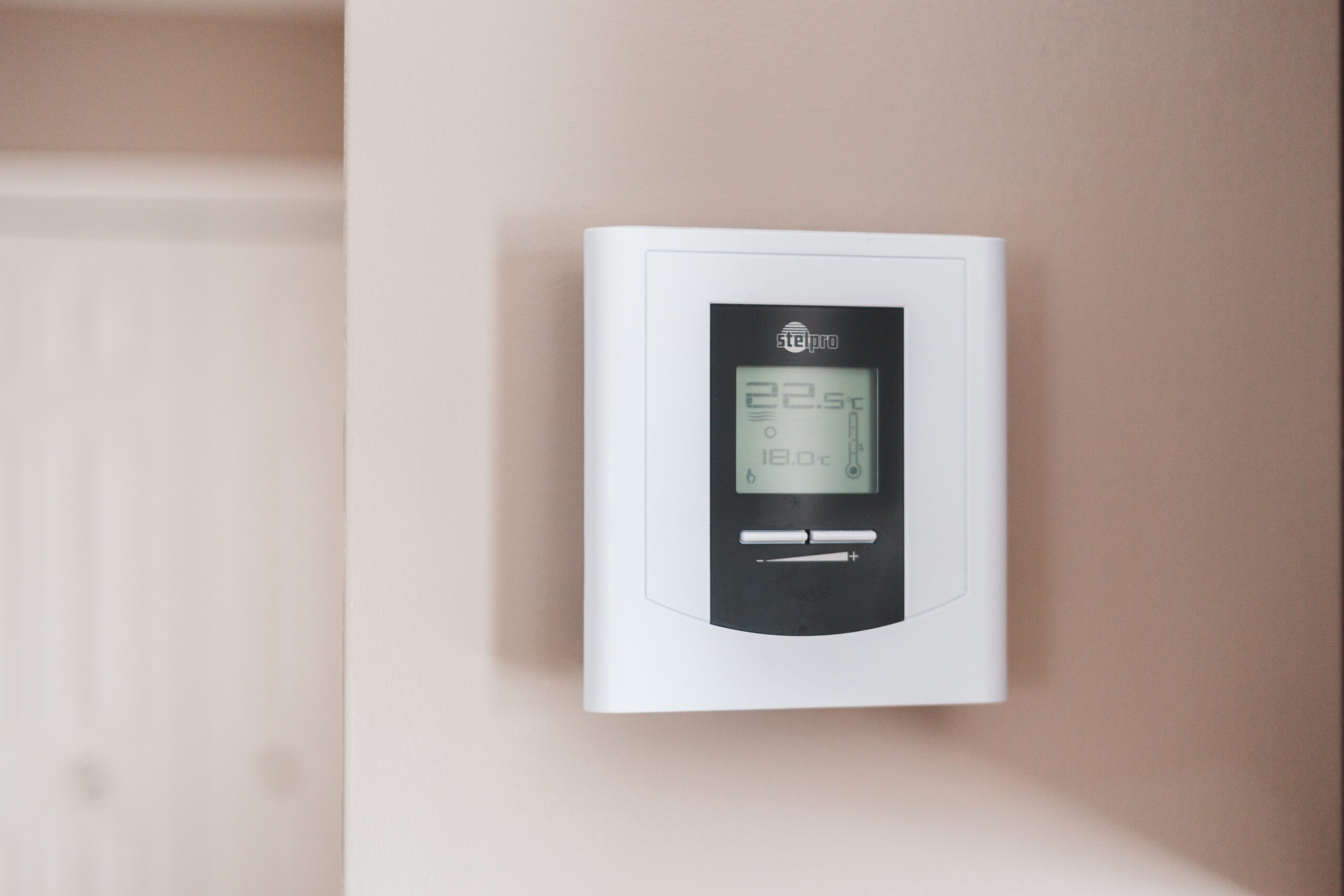
If your central heating has stopped, the fix is often something you can do safely yourself. Below, each cause follows the same shape: the symptom, what you can safely check or fix, and when to stop and call a Gas Safe engineer. If you’d rather not troubleshoot, our heating & gas engineers cover all London boroughs, 24/7.
In most UK homes, no heating comes down to one of four things — ranked by how often we see them:
- 1
Low boiler pressure. Gauge below ~1 bar — top up to 1–1.5 bar with the filling loop.
- 2
A frozen condensate pipe (cold weather). Thaw the outside pipe with warm — not boiling — water, then reset.
- 3
A thermostat, timer or battery fault — often after a power cut or a clock change.
- 4
The boiler has locked out and is showing a fault code (see the tables below).
60-second triage
- Check the boiler has power and isn’t showing a fault code.
- Check the pressure gauge — is it in the green (1–1.5 bar)?
- In freezing weather, check the outside condensate pipe for ice.
- Check the thermostat is calling for heat — battery, time and temperature.
Safety first: anything involving opening the boiler, gas, or a fault code that keeps returning means stop and call a Gas Safe registered engineer. If you smell gas, leave the property and call the National Gas Emergency Service on 0800 111 999.
Tried the triage and still no heat?
A Gas Safe registered engineer can diagnose it properly. We cover London inside the M25.
No power or ignition
Blank display or no attempt to fire
Some safe checks
The boiler screen is blank, or it makes no attempt to start up.
Check other appliances and the consumer unit for a tripped RCD or blown fuse. Make sure the gas isolation valve is open and other gas appliances (e.g. a hob) work. On a prepayment meter, check you have credit.
You have live power and gas but the boiler still won’t fire, or the electrics trip every time it tries to start.
Low boiler pressure
The most common non-winter cause — and usually a safe DIY fix.
Pressure below 1 bar
Safe DIY
The gauge reads below 1.0 bar (often a red zone), the radiators furthest from the boiler stay cold, or the boiler locks out.
Re-pressurise to 1–1.5 bar while the system is cold, using whichever filling loop your boiler has:
• External loop: open both valves on the silver braided hose under the boiler until the needle hits 1.5 bar, then close and disconnect.
• Internal keyed loop (common on Worcester): insert the white key, turn to the closed-padlock position, open the white knob to 1.5 bar, close, remove key.
• Internal keyless loop: pull the blue lever down and hold until 1.5 bar, then release.
You’re topping up more than once or twice a year — that points to a leak, a faulty pressure-relief valve, or a failing expansion vessel. Don’t just keep refilling it. Book a boiler repair.
Frozen condensate pipe
The number-one winter cause of boiler breakdowns.
Boiler stops in a cold snap, often with a gurgle
Safe DIY · ~15 min
The boiler stops during or after freezing weather, frequently with a gurgling noise, and a fault code (Worcester EA, Baxi E133, Vaillant F.28).
Find the white or grey plastic pipe that runs outside. Warm the coldest section (usually the open end or a low bend) with warm — never boiling — water (≈60–70°C), or hold a hot-water bottle or warm cloth against it. Grit the ground first, as runoff refreezes. Then hold the reset button for 3–5 seconds. Lag the pipe afterwards to stop it happening again.
It won’t restart after thawing, the pipe is at height or hard to reach, or it keeps freezing. See Worcester Bosch’s official guide.
Thermostat & controls
No response, or heating at the wrong times
Safe DIY
The boiler ignores the heat demand, or fires at odd times — common after a power cut or a clock change.
Replace wireless-thermostat batteries with fresh alkaline (not rechargeable — the voltage is too low for the signal). Reset the timer and time, and set the target above room temperature to test (try 21°C+). Move the thermostat closer to the receiver to rule out interference. On smart stats (Hive etc.), re-pair per the manufacturer’s steps.
Settings and batteries are correct but it still won’t fire — likely internal wiring or a PCB relay. See our heating controls service.
Boiler lockout & fault codes
A lockout is a safety state. Find your code below — the dot shows whether it’s usually a safe DIY fix ( green), caution ( amber), or engineer-only ( red).
| Code | Meaning | First action |
|---|---|---|
| EA / 227 | No flame / ignition failure | Check gas + condensate (thaw if frozen); reset 3–5s. Returns → engineer. |
| A1 | Low pressure / pump fault | Re-pressurise to 1.5 bar. Keeps dropping → engineer (leak/vessel). |
| C6 / C7 | Fan fault | Do not keep resetting — unsafe venting. Engineer immediately. |
| U9 / E9 | Overheat | Turn off if the casing is hot. Pump / heat-exchanger check. |
| D5 | Diverter valve | Heating but no hot water (or vice versa). Genuine part needed. |
| 202 | Anti-cycle (not a fault) | Normal — restarts on its own in ~15 minutes. |
| Code | Meaning | First action |
|---|---|---|
| E118 / E119 | Low pressure (<0.5 bar) | Re-pressurise to 1–1.5 bar via the filling loop. |
| E110 | Overheat | Bleed radiators to release trapped air. |
| E125 | Circulation fault | Bleed radiators; check pressure. |
| E133 | Gas / flame fault (incl. frozen condensate) | Check gas/credit; thaw condensate. Persists → engineer. |
| E160 | Fan fault | Engineer. |
| Code | Meaning | First action |
|---|---|---|
| F.22 | Low pressure | Re-pressurise to 1.5 bar. |
| F.28 / F.29 | Ignition / flame loss | Check gas; thaw condensate; reset once. Returns → stop, engineer. |
| F.75 | Pump / pressure sensor (sludge) | Check 1.5 bar; reset. Returns → engineer (sensor / powerflush). |
| F.32 | Fan fault | Do not reset — engineer immediately. |
| F.27 | Flame without demand | Turn off at the wall — safety-critical, engineer before reuse. |
| Code | Meaning | First action |
|---|---|---|
| F1 | Low pressure | Top up via the filling loop. |
| L2 / F2 | Ignition lockout / flame loss | Check gas; reset. Unresolved → engineer. |
| L1 | Overheat / no circulation | Check pressure; open radiator valves; reset. |
| F3 | Fan fault | Engineer. |
| L5 | Too many resets (5 in 15 min) | Isolate power at the spur, wait 5 min, restart. |
Golden rule: never repeatedly reset a fan fault or a flame-without-demand fault — those protect you from unsafe combustion gases.
Radiators not heating evenly
Cold at the top → trapped air
Safe DIY
Bleed the radiator with a radiator key until the hiss stops and water trickles out. Re-pressurise the boiler afterwards if the gauge has dropped.
Cold at the bottom → magnetite sludge
Engineer
Sludge settled at the base of the radiator needs a professional powerflush or chemical clean; fitting a magnetic filter then keeps it from returning. Explore our radiator replacements and central heating repairs.
Hot water but no heating (or vice versa)
Stuck diverter valve
Engineer only
Your taps run hot but the radiators stay cold — or the reverse.
The diverter valve sits inside the boiler casing, so this isn’t a homeowner fix.
Banging, gurgling or whistling (kettling)
Noisy boiler or a lukewarm system
Engineer
Banging, gurgling or whistling, or the whole system running lukewarm.
Usually limescale or sludge on the heat exchanger, or a failing central heating pump — left alone it shortens the boiler’s life and needs an engineer to diagnose. See our heating repair service.
When to call a Gas Safe engineer
Any gas work, anything behind the boiler casing, any fan or flame safety code, recurring pressure loss, sludge, or any fault that returns after a single reset. Always check registration on the official register before anyone works on your boiler. If you smell gas: leave and call 0800 111 999.
Landlord or managing agent?
A tenant’s home must have working heating and hot water, and a valid annual gas safety certificate (CP12) is a legal requirement — and a precondition for a valid Section 21 notice. PH247 handles boiler repairs, gas safety certificates and portfolio maintenance across London, with clear reporting.
Frequently asked questions
Why is my central heating not working but I have hot water?
What pressure should my boiler be?
My boiler keeps losing pressure — why?
How do I thaw a frozen condensate pipe?
Why are my radiators cold at the bottom?
When must I call a Gas Safe engineer?
Heating still down?
PH247 engineers are Gas Safe registered and cover all London boroughs inside the M25 — 24 hours a day, 365 days a year.


 Explore our home maintenance guide & news
 Privacy Policy